
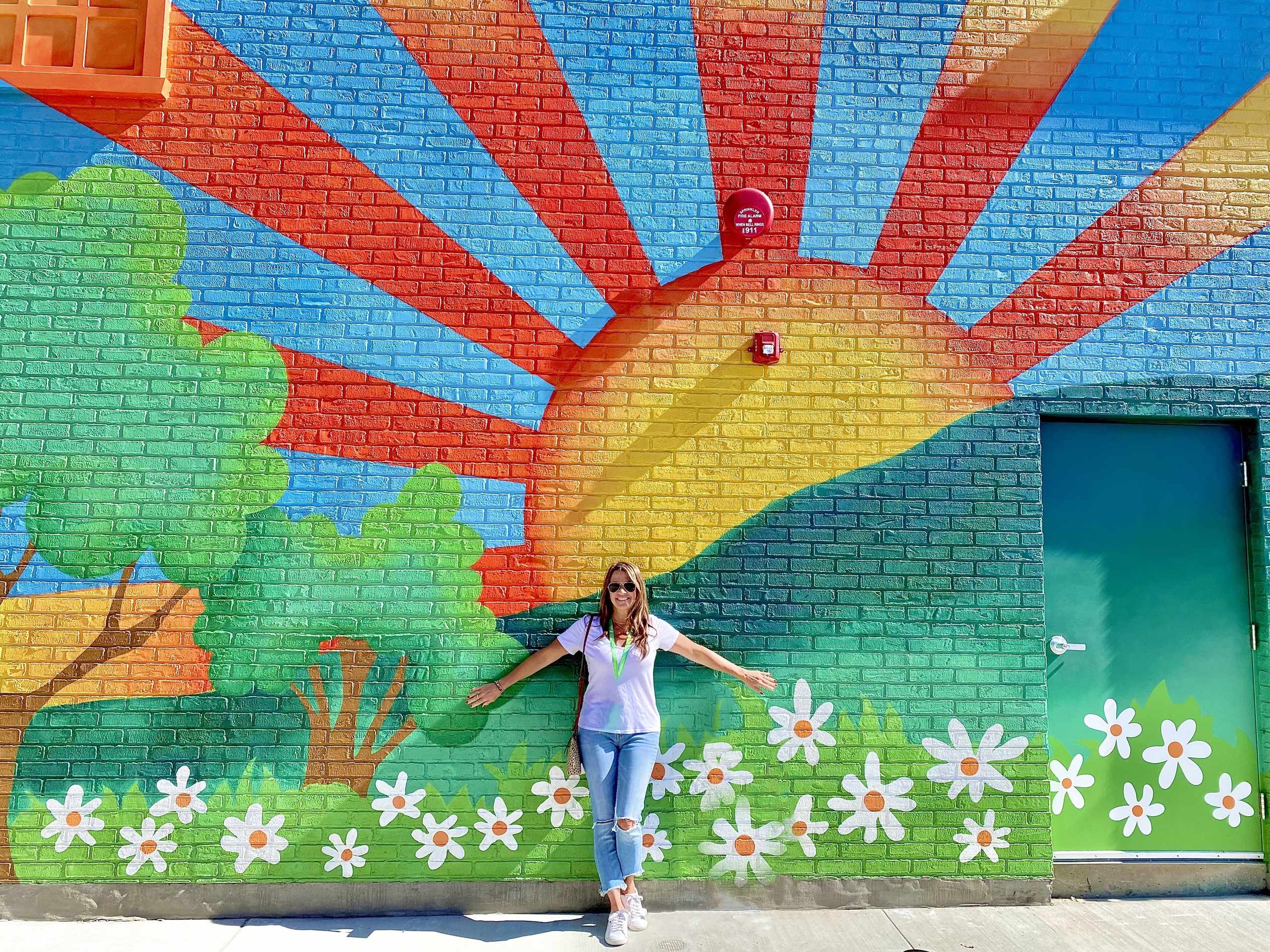
A strip of painter’s tape may seem innocuous, and it seems like a perfectly straight line the moment it hits the wall, but the edge can become ragged after the tape is pulled back. A rough edge is particularly distracting on a mural with geometric blocks, a painted border, an arch, a word, or a solid shape of color that must appear smooth when seen from a distance. Tape will support a good mural, but it isn’t a substitute for surface prep, adequate sealing, and painting at the right time.
How the edge turns out depends on the state of the wall first. A dusty wall, loose paint, a heavy texture, or a very shiny patch can keep the tape from lying flat. Wipe the area you intend to tape over, and make sure it’s dry. You have to understand that on a textured wall, the tape will never lay down perfectly across the surface and will leave dips in between, so you have to allow for some possibility of bleeding along the taped edge. If the wall is so textured that a clean edge is not going to happen no matter how you use painter’s tape, you can either plan on an edge that looks softer, or practice with an angled brush instead of relying only on tape for a perfectly sharp line.
Lay down tape with a careful hand in shorter sections, instead of stretching one length across the whole wall. The tape will be tempted to bend or even snap back into the middle of the wall if it is pulled and held at high tension. A level and a light pencil line can guide you for painting straight lines on the mural, such as a border, while curved lines can be made of small pieces of tape overlapping one another along the outline of the curve. After you have pressed the tape firmly along its edge to be painted, run a finger or soft cloth firmly along the edge that you have to paint on so that the edge is sealed on the painting side but not to the point where the tape can be impossible to pull off cleanly.
It’s easy to ruin the taped edge simply by using too much paint when you paint. You’ll find that any kind of brush or roller will push paint under the tape, especially at textured walls, if you load the tool too heavily. Paint lighter near the edges and draw the brush away from the tape line instead of forcing it into the tape. When painting a large painted block, paint the taped border first with controlled pressure, then use the roller or wider brush for the middle area. You can keep the brush away from the taped edge when you’re not using it.
Painting just a bit of tape on an area outside the actual mural is worth knowing more than just guessing how it will look on the finished product. Put a short strip of tape on a test board or inconspicuous area on the wall, then paint one side with the interior paint or acrylic paint you’re going to use. Paint one area with lighter paint and one area with more paint, so that you can observe how the edges appear when you peel off the tape. You can get a sense of how well the wall texture, consistency of the paint, how much paint is on the brush, and whether you wait too long before removing tape will interact to give you good or bad results. In addition, you can practice peeling tape at a steady angle, rather than lifting the tape up too sharply.
Tape removal needs patience, but waiting too long can cause trouble. If paint dries fully over the tape edge, it can tear or pull up small pieces when the tape comes off; it will smear if you peel off the tape before it is dry enough. Many artists who are painting their own murals like to remove the tape once the paint feels settled, then leave the paint exposed to dry without having to touch or clean the edge. Pull the tape back gently and at a low angle as you remove it, but if you notice that paint is pulling away with the tape, try removing tape and using a very small craft knife if you can reach the taped edge without damaging the paint layer.
A ragged edge can always be made better after the paint dries and is fixed with a fine brush and some paint. You’ll be likely to create a bigger problem by trying to clean a line up that is wet at the moment that you’re repairing it. Before painting anything, step back and decide if the imperfection will be noticeable at a normal distance for viewing. To get crisp lines for your mural, use a few good habits: keep the surface smooth and clean, position the tape carefully, paint lightly over the edge, remove the tape at the right time, and learn when you have to leave it alone to dry completely first.